Postural Analysis
Optimize your posture with advanced technology and clinical expertise
Medispine, in collaboration with the innovative technology of Biotonix, offers you the opportunity to benefit from a comprehensive postural analysis. Our AI technology conducts a detailed analysis of your posture in just a few minutes. Afterward, your professional will perform a neurophysiological evaluation of your body, review your results report, and develop a complete action plan to improve your posture!
Manual therapy, joint mobilizations, exercise plans, recommendations for supplements and/or alternative therapies: a winning combination to optimize the health of your spine and, consequently, your nervous system.
Whether you are seeking relief from existing discomfort, aiming to prevent future pain and issues, or simply want to improve your posture, our personalized recommendations provide you with effective solutions. Contact us today to schedule your comprehensive postural analysis and take the first step towards a healthier you.
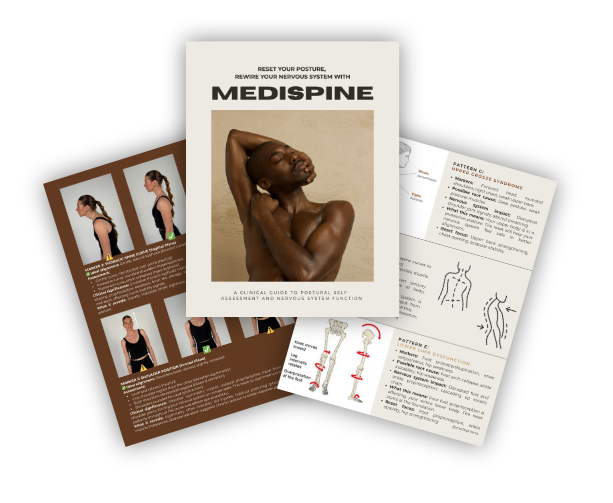
Learn More: Download our free ebook

FAQ
Posture refers to the alignment and positioning of the body while sitting, standing, or moving. It is crucial because proper posture maintains the natural alignment of the spine and musculoskeletal system, which reduces the risk of discomfort and injuries. Good posture supports optimal functioning of the organs and enhances overall body mechanics.
Common signs of poor posture include rounded shoulders, a forward head position, and excessive curvature of the lower back (lordosis). You may also notice discomfort in your back, neck, or shoulders, and experience fatigue or difficulty maintaining an upright position.
Recognizing these signs early can help in addressing posture-related issues effectively.
Poor posture contributes to chronic health issues by altering the natural alignment of the spine and placing undue stress on muscles, ligaments, and joints. This can lead to muscle imbalances and overuse injuries. Over time, this repetitive strain can cause conditions such as herniated discs, degenerative disc disease, and sciatica.
Additionally, poor posture can affect the body’s biomechanics, leading to compensatory movements that increase the risk of injury and chronic pain syndromes.
The long-term consequences of poor posture include chronic musculoskeletal pain, particularly in the back, neck, and shoulders. Poor posture can also contribute to the development of spinal deformities such as kyphosis (excessive forward curvature of the thoracic spine) and lordosis (excessive inward curvature of the lumbar spine).
These deformities can lead to nerve compression, reduced mobility, and functional impairments. Additionally, poor posture can decrease lung capacity by compressing the thoracic cavity, and impair digestion by putting pressure on the abdominal organs.
Common posture-related health problems include lower back pain, cervical spine pain, tension headaches, and shoulder impingement. These issues can be prevented by maintaining an ergonomic workspace, which involves adjusting the height of your chair, desk, and computer screen to promote a neutral spine position. Regular physical activity, focusing on exercises that strengthen the core and back muscles, is essential.
Additionally, incorporating stretching routines to alleviate muscle tightness and practicing mindfulness techniques to maintain awareness of your posture throughout the day can be beneficial. Neurological stimulation exercises, such as balance training and proprioceptive activities, can also play a critical role in preventing posture-related issues.
Yes, poor posture can be corrected with appropriate interventions. A combination of posture awareness, targeted exercises, ergonomic adjustments, and possibly professional guidance from our healthcare practitioners can significantly improve posture and alleviate associated symptoms.
A combination of posture awareness, targeted exercises, ergonomic adjustments, and possibly professional guidance from our healthcare practitioners can significantly improve posture and alleviate associated symptoms.
Yes, specific exercises and stretches can significantly improve posture and overall health. Strengthening exercises targeting the core, back, and shoulder muscles, such as planks, rows, and shoulder blade squeezes, help maintain proper alignment and support the spine.
Stretching exercises that focus on the chest, neck, and hip flexors can alleviate muscle tightness and prevent postural imbalances. Incorporating flexibility exercises such as yoga and Pilates can enhance overall body awareness, balance, and posture.
Additionally, proprioceptive and balance exercises, such as single-leg stands, balance boards, and dynamic stability drills, can improve neurological stimulation, enhance body awareness, and support better posture.
Anytime, really! Because it is never too late to start taking care of yourself. Our healthcare practitioners can provide a thorough assessment and develop a personalized treatment plan. We use diagnostic tools such to identify underlying issues and recommend appropriate interventions, including physical therapy, ergonomic adjustments, and targeted exercise programs.